


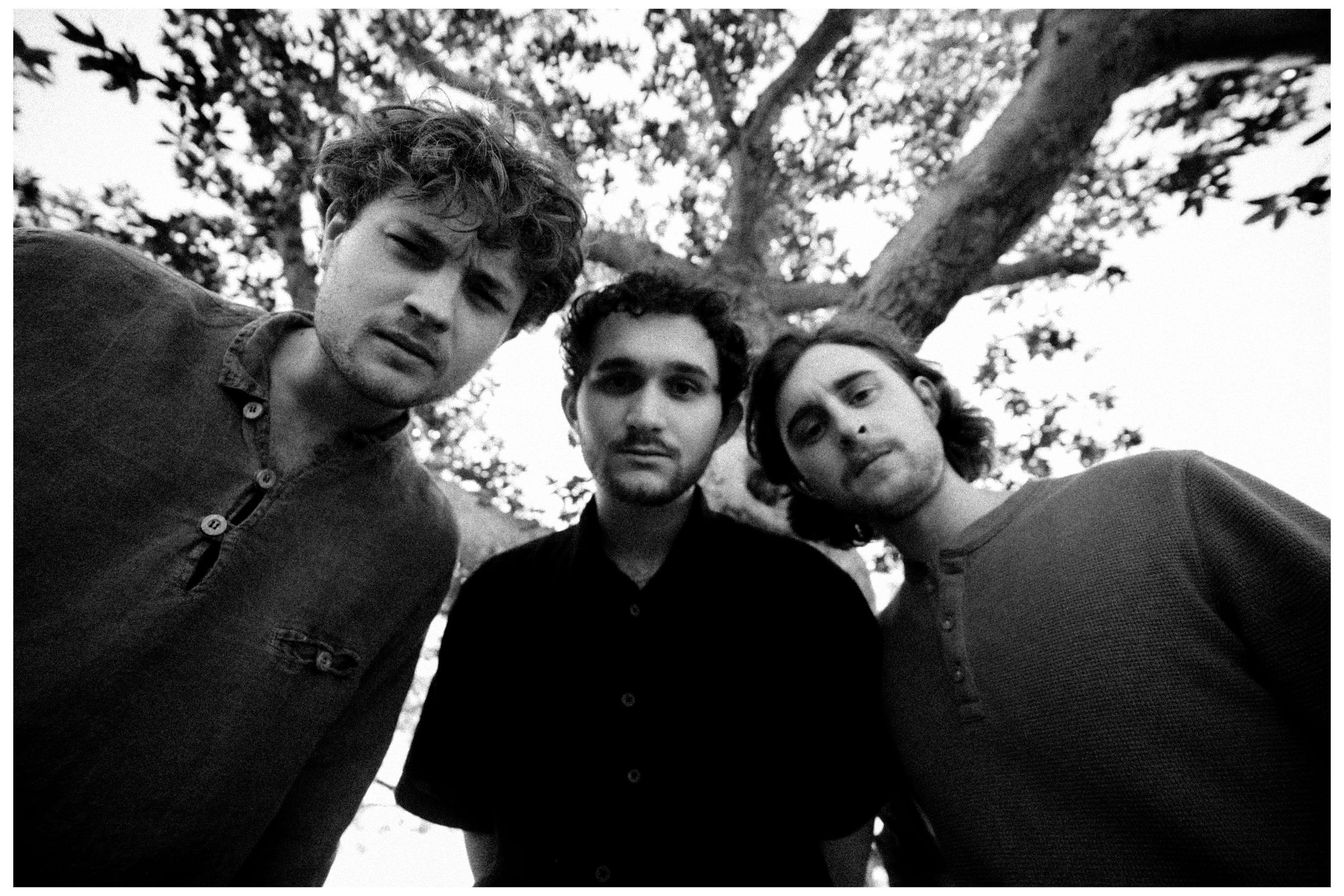
There is a barn, a few miles inland from the Long Island Sound, in the small town of Lyme, Connecticut. It has stood for three centuries on the same family farm. It is older than the bicycle, the battery and the United States of America. This barn has outlived three centuries, several species and every person it’s ever met.
And yet, it has stood long enough to see the days where, inside its reddened walls, three kids spent their teenage years becoming best friends, dreaming of greatness, writing songs and recording an album together about immortality.
That record, The Ever Dying Bristlecone Man, turns 10 years old today.
Ten years might just be a weekend to this barn, but it’s a lifetime to The Brazen Youth.
The Connecticut indie trio has had their lives changed by this record. Over the last decade, the album has built a devoted following, and so has the band. To commemorate the album’s anniversary, The Brazen Youth pressed The Ever Dying Bristlecone Man on vinyl for the very first time, alongside three new bonus tracks and live versions of “Emma” and the album’s biggest hit, “Center of Gravity.”
It’s a milestone moment, and it’s been a lot more than 10 years in the making.
Before The Brazen Youth
Nic Lussier and Charlie Dahlke first met when they were 13 years old. The two kids were tricked into making music together by Dahlke’s cousin, one of Lussier’s childhood pals. He told each of them, separately, that the other wanted to be in a band together (The Parent Trap style). They immediately hit it off.
Not long after meeting, the two of them receded from sports and extracurriculars to spend all of their free time on Ashlawn Farm, the property that’s been in the Dahlke family for generations. In the old barn, they smoked a lot of weed, wrote a lot of songs and listened to a lot of capital-I Indie Music.
“We were so pretentious,” Dahlke said. “We only listened to obscure music. The more obscure, the better.”
It was a constant contest between Dahlke and Lussier as to who could be hipper, more eccentric, more indie. More than a decade later, you can still see how their demeanors balance each other out. Lussier speaks selectively, pensively, looking for the right words. Dahlke gets straight to the point, a wise-cracker and willing spokesman for the band that formed in his childhood home.
Once they started making music together, several band names came and went, and they put out a few EPs (which still exist on Spotify, but they won’t tell you where to look). But it wasn’t until they were in their later teenage years that The Brazen Youth stuck. And few band names have ever been this apt. From the jump, these kids thought they were the next big thing.
“We were very ambitious,” Dahlke said. “We thought we were making something extremely important.”
After finding out he didn’t get into college, Dahlke retreated from school midway through his senior year to focus full-time on the album. He even slipped out of his senior thesis by convincing the teacher to let him make the record — and its subsequent tour — his project.
“And then Nic booked the entire tour,” he smirked. “I got 100 percent.”
A few states to the north, they had another believer: Micah Rubin.
The drummer and Vermont native met Dahlke and Lussier at a music camp in Boston. They were peers, but Rubin immediately looked up to these new friends. He held them in the same breath as his musical heroes, and speaks romantically of the moment when he first heard songs from The Ever Dying Bristlecone Man in a camp dorm room.
“I just remember, even though we’re all the same age, being like ‘This is the craziest thing I’ve ever heard.’” he said. “I felt like I could tell it was ahead of our time, even. I was really blown away.”
As a sort of audition, Lussier and Dahlke invited him out to the farm to record a few songs for The Ever Dying Bristlecone Man. Luckily for Rubin, he was a good hang. Once it was released, he became a full-time member of the band.
“He was a personality hire, mostly,” Dahlke laughed.
“And then he ended up being the best drummer either of us have ever heard,” Lussier clarified. “Sometimes you just know.”
‘The more you know, the less you can imagine’
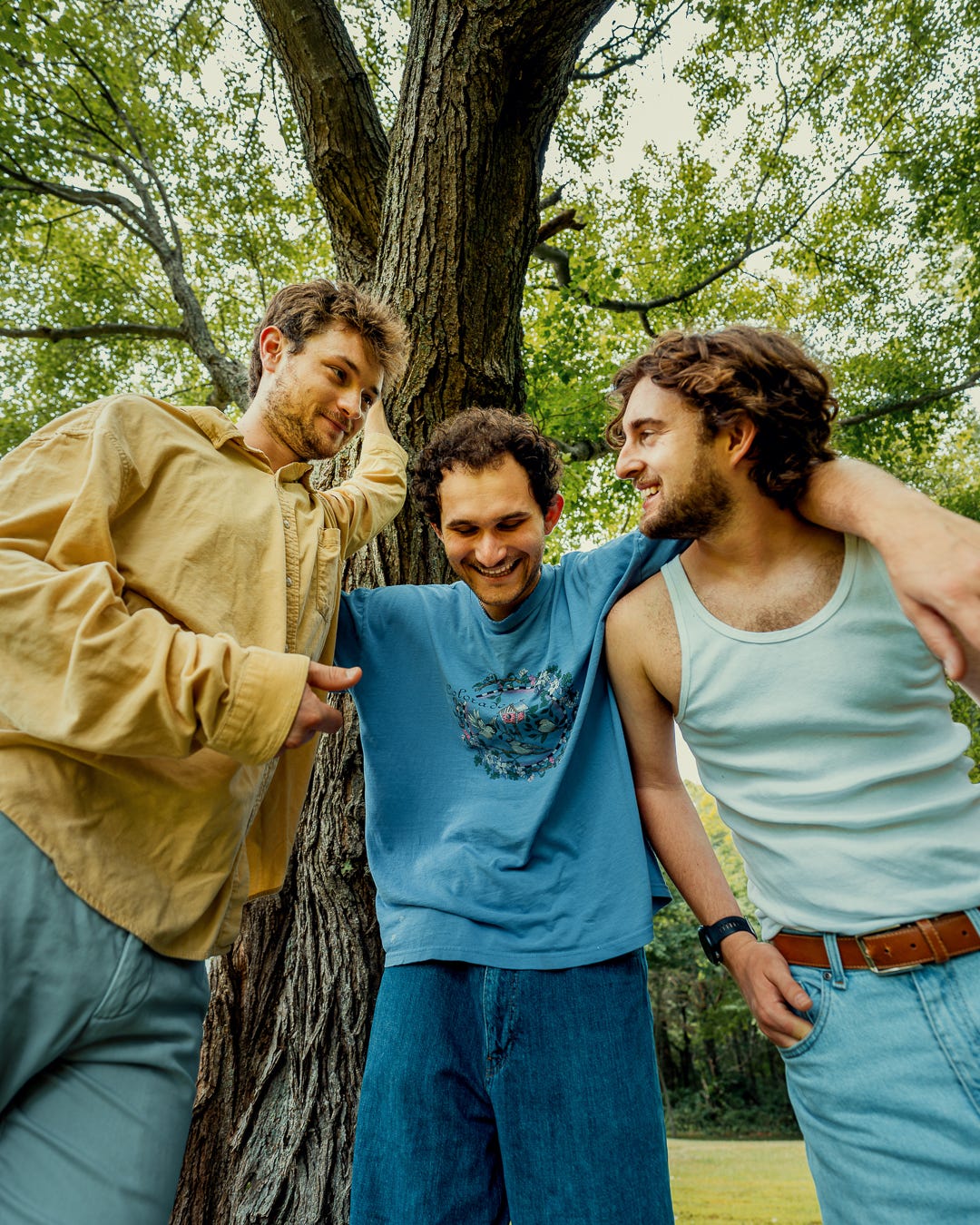
Even though The Brazen Youth had technically put out an album before, all three consider The Ever Dying Bristlecone Man their proper debut. It’s their first record as a trio and the first album they felt truly proud of. As Dahlke puts it: “It’s the point where we feel like The Brazen Youth started.”
Early in the process, The Brazen Youth knew they wanted to make a concept album. That’s what all their favorite records were at the time: Illinois by Sufjan Stevens, Hospice by The Antlers, Neutral Milk Hotel’s In The Aeroplane Over The Sea.
But the concept didn’t take shape until Lussier saw the acclaimed 2012 animated film It’s Such A Beautiful Day. Here’s the short version of this short film: A stick figure protagonist named Bill has a mundane life, which gets increasingly difficult as he suffers from memory loss, familial trauma, schizophrenia and paranoia, until he finally drives into the woods to die under a tree. It’s surprisingly hopeful. At the end, Bill doesn’t die — he instead lives forever, witnessing the entirety of humanity pass him by until the universe finally collapses.
This is the central idea of The Ever Dying Bristlecone Man: What if one man lived forever? What if he saw every single sentient being live, and then watched every single one of them die? Imagine the beauty, the grief, the weight of time on his shoulders.
The Bristlecone Man is named after the Bristlecone Pine, a tree with one of the longest lifespans of all organisms on Earth. The oldest one resides in the White Mountains of central California and it is almost 5,000 years old. Lussier saw one for the first time just last year.
“They’re so beautiful,” he said. “How gnarled they are, they almost look dead. If you didn’t know what it was, you’d think it was dead.”
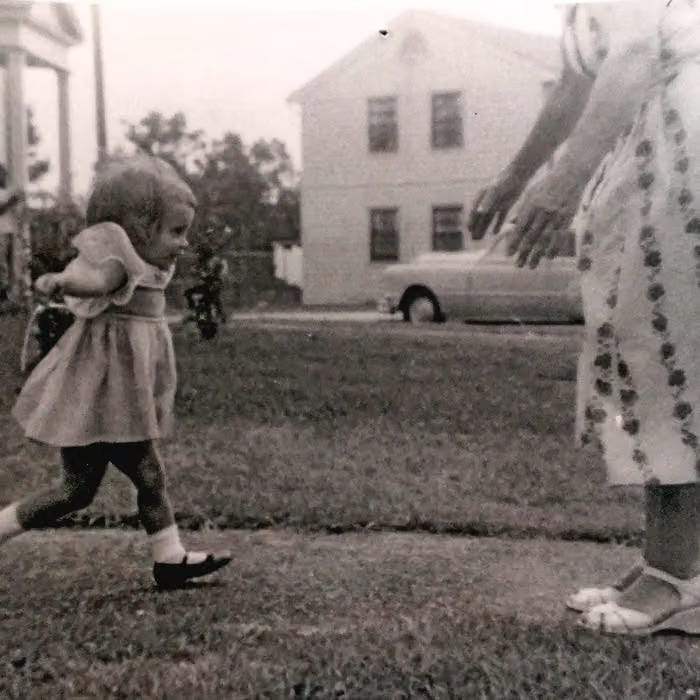
Everything about the record’s process embraced the concept of timelessness — even the album’s cover spans multiple generations. It’s a photo of a photo, captured on a flip phone, of Lussier’s aunt running into her grandmother’s arms. They still can’t find the original, so the pixelated version was retouched by a photographer friend of the band’s to add texture.
Then, of course, there’s the farm itself. Surrounded by old relics in a building more than 300 years old, it was easy to fall headfirst into the ideas of immortality.
“(The farm) was definitely a massive influence,” Lussier said. “It’s such a whimsical place. There’s this old cemetery in the middle of the woods, there’s a cabin in the back fields. There’s this endless river of inspiration there.”
Genre-wise, The Ever Dying Bristlecone Man could probably best be described as maximalist indie-folk. The Sufjan Stevens and Neutral Milk Hotel influences are most apparent, but you can pick up on some Justin Vernon-isms, too.
There are dozens of instruments used on the record. Among them: lush acoustic guitars, a musical saw, triumphant horns (that wear the Illinois influence pretty proudly) and gentle piano melodies. The keys on the record were actually recorded on Dahlke’s childhood piano, an old gray keyboard that the band spray painted orange, yellow and blue to fit their edgy ambition. Many of the album’s atmospheric moments started as presets on that keyboard.
While it would be natural to credit the barn with the album’s rustic feeling, the band admits that the real glow is just inexperience.
“I think we were extremely naive,” Lussier said. “Our world was just so small. And that was beneficial, because it helped us take some creative liberties with our … inflated sense of specialness.”
It’s a naivety that the band has been chasing ever since. The childhood keyboard is gone now. Dahlke is looking for another one. By no means do they consider Bristlecone Man to be an artistic peak, but there’s a magic to that kiddish swagger that comes across on the record. Back then, when they talked about musical ideas in the studio, Lussier said they’d use terms like “we need an electric ocean” and not, as they would now, a specific delay pedal.
“Due to our lack of music production knowledge at that point, we were trying to capture moments and feelings rather than tones,” he said. “I think it’s harder now to roll with the imperfection.”
Dahlke puts it bluntly: “The more you know, the less you can imagine.”
‘It gives me chills’
As with any teenage project, the band does cringe a bit when they listen back, despite their pride in the final project. Especially lyrically, they wrote without shame, a trait they learned from songwriting hero Jeff Mangum of Neutral Milk Hotel.
“With Jeff Mangum, it’s a little perverse,” Dahlke said. “And I think that was really liberating for us. You can say anything in your lyrics if it means something to you.”
That’s how you end up with lines like “floating around like a bug in a milkshake” on the bombastic ballad “Cry for The Aliens.” Or a one-minute, orchestral album opener called “human beings are the only creatures capable of dehydrating with a glass of water in front of them.” Or even the fluid song structures of the “You’ll Be Forever Nameless” series — a 14-minute, B-side-opening suite that spans five songs and varies between dreamlike, hallucinatory, yearning, fearful and free.
I wish I was your car, I wish you was your car
You’d rely on me to move ahead
And I, I wish I was your clothes, I wish I was your clothes
I’d wrap myself around to dignify you
“‘I wish I was your clothes’ is a lyric we would not have written pre-finding Neutral Milk Hotel,” Dahlke said.
The “You’ll Be Forever Nameless” series effortlessly gives way to the album’s anchor, “Center of Gravity.” This is the track that brought me to this album six years ago, and it’s the band’s biggest hit with just shy of 10 million streams on Spotify.
“Center of Gravity” is a tonal masterpiece. It balances hints of climate anxiety, teenage angst and a longing for tranquility. The reality is that this song’s serenity was aspirational. Dahlke wrote it on Christmas Day at 15 years old, to the sounds of his parents fighting their way toward divorce in the other room.
“I just found a little corner of the house, curled up and wrote that song,” he said.
He still remembers the look in the family’s eyes when he asked to perform it for them later that night. He also remembers a lyric change on the first verse. It opens:
He is 16, and locked out his car
And he’s waiting for someone to call him home
“I was 15 when I wrote that lyric,” Dahlke said. “And I was so insecure to be writing a song that I felt like was good, and deserved to be heard, at 15 years old. I used the lyric ‘16’ because I thought people would take me more seriously.”
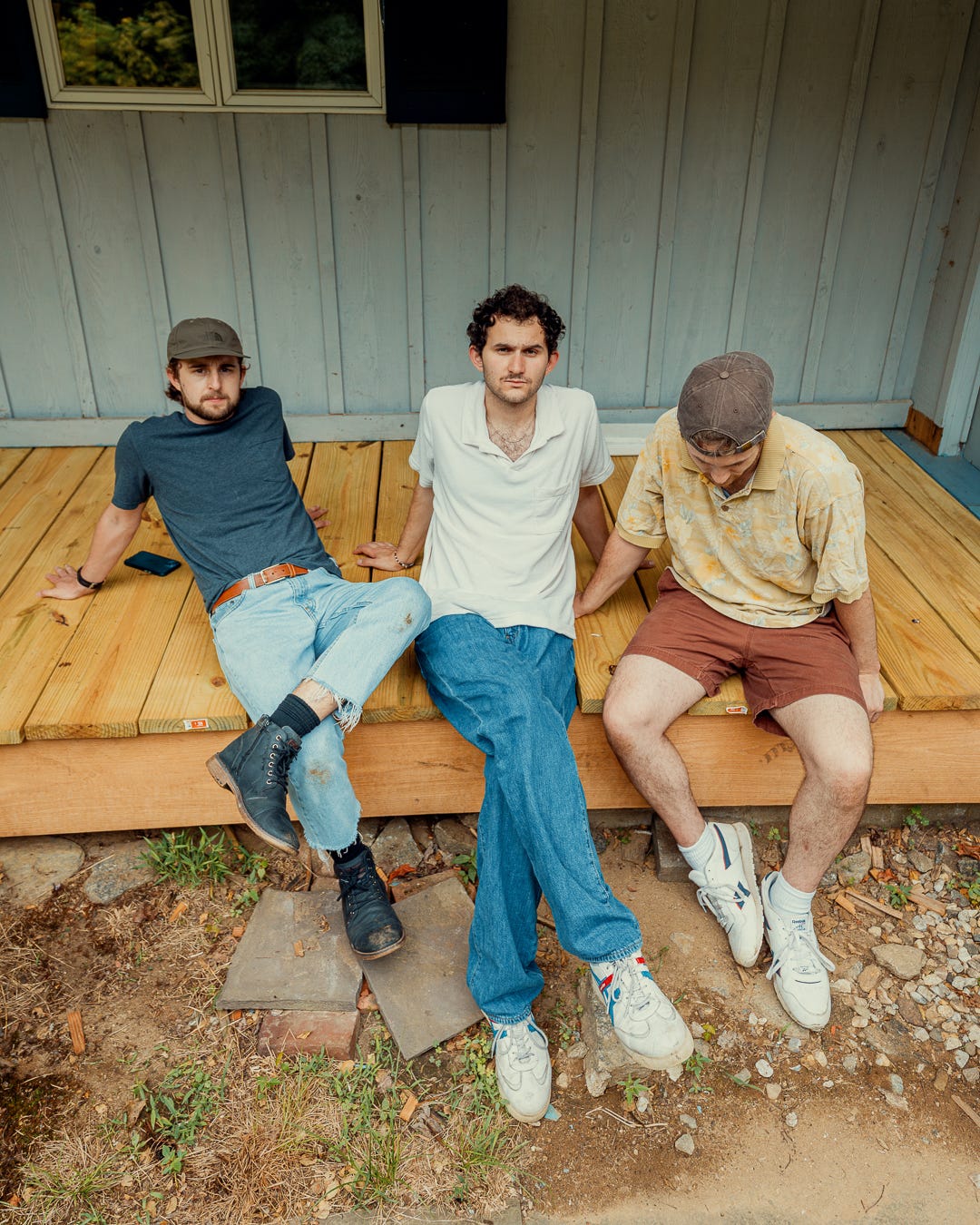
While “Center of Gravity” has had the most eventful shelf life of any track on Bristlecone Man, “Let Us Be Alone Again” is the one that’s aged the best — or worst, depending on how you look at it.
The song was written in the midst of Donald Trump, the candidate, before Donald Trump, the autocrat. It oddly foreshadows much of the decade that has followed, so keenly that it’s remarkable it came from the brains of high school kids. In this song, you can see the coming wave of surveillance, policing and the AI-accelerated devaluation of human creativity. The first verse is particularly visceral.
They broke my jukebox, my music has turned into ash
They took the lightings, the drawings, the clothes off my back
They left us crawling astray
We all bow down to a man in a toupee. You're not my leader
No, I don't belong here
The song ends with a hypnotic, spoken word poem that is a bit polarizing within the band. When I bring it up, Dahlke flinches.
“Oh boy, delete that song,” he says with a bit of an eye roll. Lussier agrees, adding that the song “encompasses the pretension and inflated egos” of their youth.
But this is where Rubin’s role in the band becomes clear. He is their heart. Where Dahlke and Lussier are focused on what’s next and reluctant to revel in their successes, Rubin is the one who is happy to pat his bandmates on the back. He’s proud of them. He runs to the song’s defense.
“I feel like the consensus is that the spoken word is kind of silly, but I remember at the time being really into it,” Rubin says, adding that the song’s stacked harmonies jumped out to him when they first sent him a demo. “To be honest, it was a new way of thinking about songwriting. I was blown away.”
Once Rubin opens this door, Dahlke walks through it. He admits that he revisited the track recently and is also in awe of the way it’s aged.
“It’s weird to say it, but it gives me chills,” Dahlke says. “Even the (title) lyric — ‘Let us be alone again’ — is sort of like rejecting fascism. We live in the largest surveillance state of all time, with Flock cameras, ICE and the general police presence in this nation right now. It truly is weird how everything has come true.”
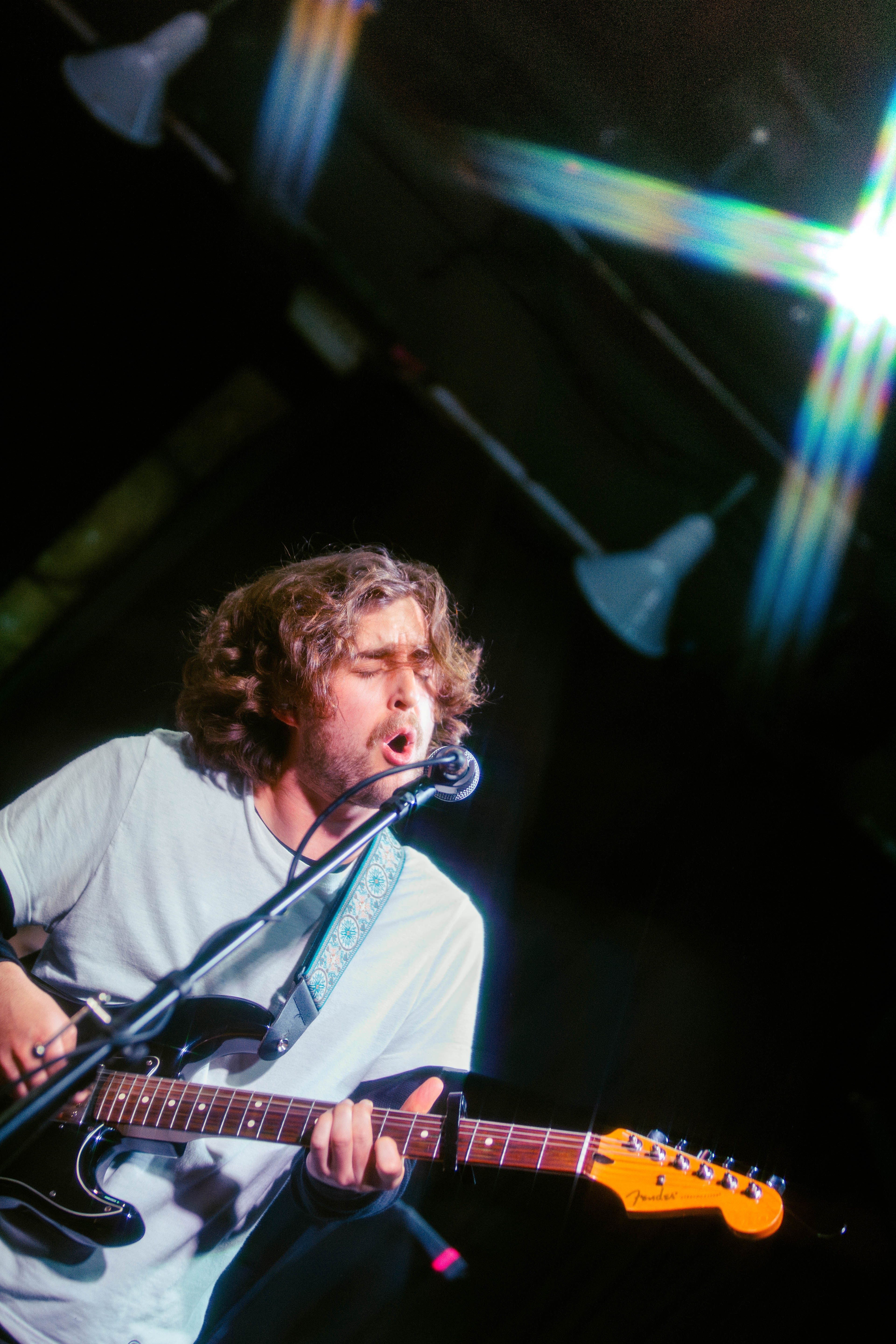
A new album on the way
The 10th anniversary version of The Ever Dying Bristlecone Man will feature live cuts of “Emma” and “Center of Gravity” alongside three unreleased songs that were written in the Bristlecone Man sessions. One of those tracks, “I’m So Guilty (Light People),” has a reference to It’s Such A Beautiful Day and ties together the album’s concepts more clearly. Dahlke said it narrates the Bristlecone Man’s life.
“Looking back, maybe we just didn’t like the song,” he said. “But it sort of is the centerpiece of the record.”
Going back to these unfinished tracks has also reinforced the time-warping, immortal themes of the record. Lussier said it’s felt like collaborating with their younger selves. They’re finally seeing through some of the big ideas they had as teens.
They’re also working on a music video for “Center of Gravity” and combing through archival videos of themselves when they were kids. Rubin, the self-proclaimed sentimental one, has cherished this.
“Going through all that stuff brings nothing but joy for me, to remember those times,” he said. “Those were probably, in some ways, some of the happiest times in my life.”
Perhaps most crucially, this anniversary edition of the record will be pressed on vinyl. That means the album about living forever can now, properly, live forever.
This is not lost on Dahlke.
“It’s very nice to know The Ever Dying Bristlecone Man is going to exist in a physical form,” he said. “When the solar flare comes and all our data is toast, physical media is really important. The fact that, in a thousand years, there’s still going to be evidence we made this … it’s very Bristlecone Man.”
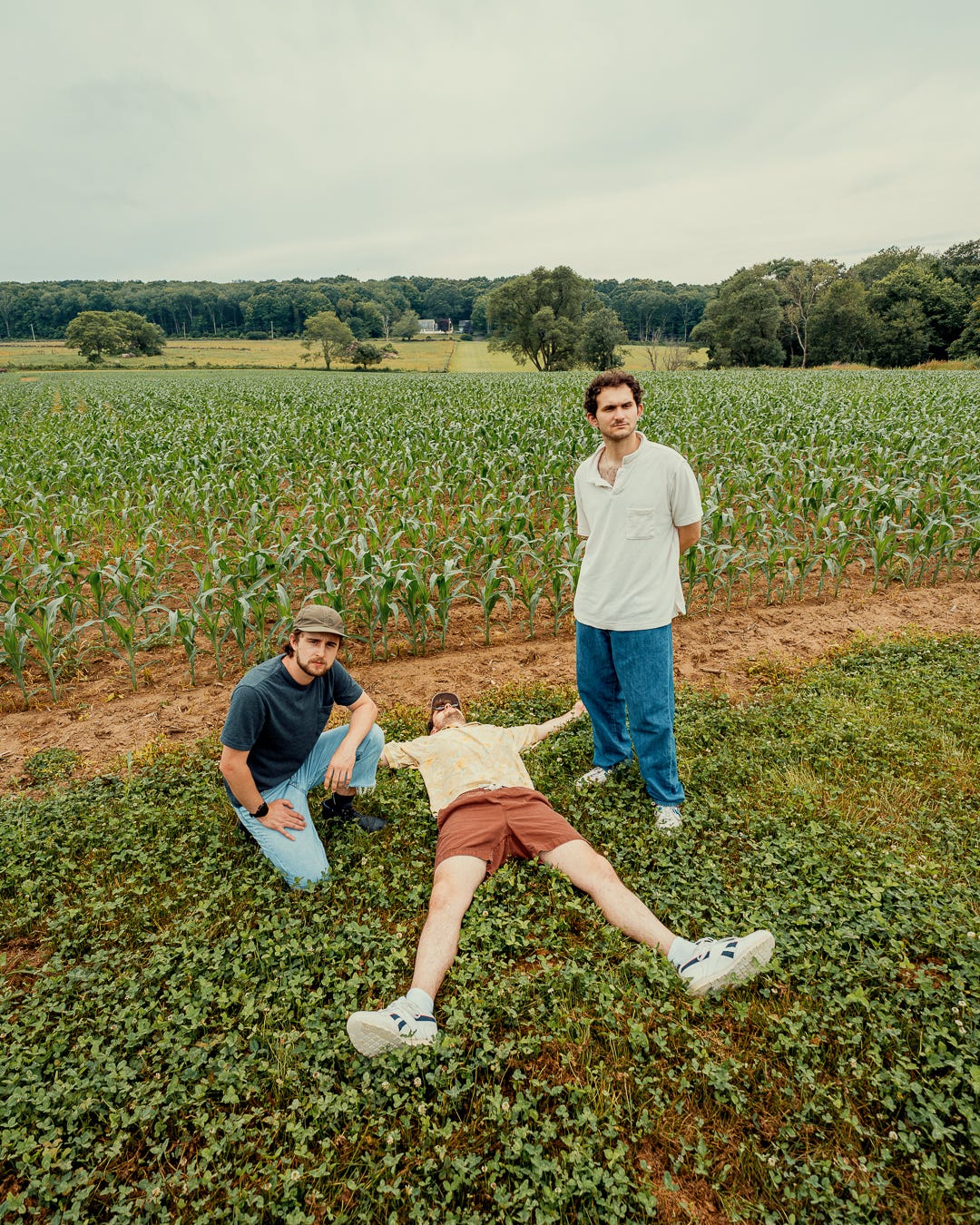
Ten years later, the band is scattered across the country.
Rubin is now based in New York City, traveling the world as a tour manager for artists like Ivri, former Brazen Youth live guitarist Mei Semones and Annie Dirusso. Lussier has been making solo music under the name Downey Chase, and also works as the marketing director of the Boulder Philharmonic Orchestra. Dahlke is still on that farm, now known as Ashlawn Recording Company, a residential space where artists can come and tap into that 300-year-old magic. He’s produced albums for bands out of Nashville, New York and L.A. — including one by Philly post-hardcore buzzband Trophy Wife.
“There’s a little bit of lore to coming to the farm and making an album,” Dahlke said. “I never wanted to make this a commercial, sterile space. I wanted it to feel inspiring and rough around the edges, a place where we can get back to the limitless, unknowing imagination of the Bristlecone mind.”
After a multi-year hiatus, the three of them have recently reconvened to record a new album, which Lussier proclaims is their best work yet “by a mile.” Dahlke agrees, but he’s nervous.
“I feel like there’s sort of a new chapter we now need to navigate,” he said. “I’m looking forward to it, but I’m also a little scared. Because I think we’re sitting on not just our best record — but as a producer, some of the best work I’ve worked on — and I don’t want it to not be heard.”
There’s more pressure now, a sense of urgency when you’ve been in a band for ten years and have lofty childhood ambitions to meet.
“All of us, consciously or unconsciously, want to not let that version of ourselves down,” Lussier said.
But Rubin is quick to remind the band why they’re still here, ten years later. The sentimental one, always, is there to bring the trio back to the soil they were planted in. It’s friendship that keeps The Brazen Youth young.
“We had a session earlier this summer, and it was one of my favorite weeks of the year,” he says through grinning teeth. “Being able to have that opportunity to create reminds me of what was — and reminds me of what can continue.”
Dahlke seconds that, and makes note of all the improbabilities: The Brazen Youth don’t have a manager, have never signed to a label, have never played a major festival or booked a major tour. Yet here they are.
“The thing that keeps us together is not that we’re making hundreds or thousands of dollars or anything — it’s that we’re friends,” he says. “It’s remarkable we got into this position at all, and the thing that keeps it going is our bond.”
As kids, Dahlke said they never wanted to win a Grammy.
“We just wanted to make a cult classic.”
Something tells me those kids are already proud.
The kids who fought each other over how cool, how esoteric, how arty they could be? Yeah, they’d probably love the word-of-mouth indie success story whose one-of-a-kind debut album had a long enough impact to be pressed on vinyl 10 years later.
The Ever Dying Bristlecone Man is an album about living forever, written by a band who already has.